


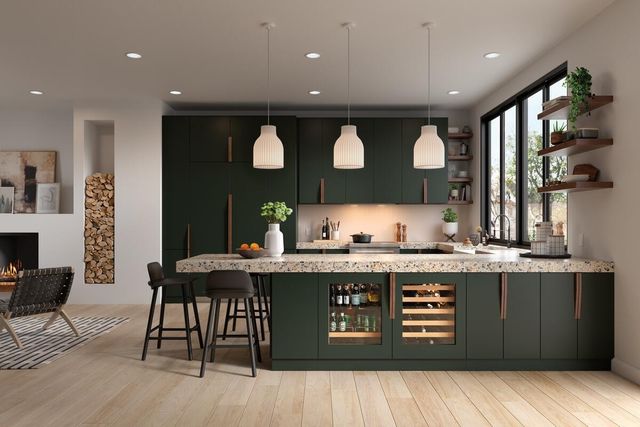
The kitchen refrigerator on a Saturday in July tells the whole story. Two shelves are stacked three cans deep with sparkling water and sports drinks, a gallon of milk is wedged sideways because the door bin is full of mixers, and a can that rolled off the top shelf is now lying under the crisper drawer at room temperature. Every time a guest wants something cold, the door opens, the interior light comes on, and the compressor starts over. That daily traffic jam is the reason refrigerators for beverages exist as their own appliance category, separate from the box that holds your groceries.
Here is the part that makes this an easy problem to fix: a dedicated drink unit takes the entire beverage load out of the main refrigerator and holds it at a colder, steadier temperature than a grocery fridge ever will. At Urner’s, our appliance specialists size these units into kitchen islands, basement bars, home offices, and covered patios across Bakersfield and Fresno, so we know which model survives a Kern County August and which one does not. This guide covers what separates a beverage unit from a wine cooler, how to size and measure for one, the three installation types and their venting rules, cooling technology and temperature zones, the features worth paying for, and what the unit costs to own over the next decade.
Find the Beverage Center That Fits Your Kitchen, Bar, or Patio
Our appliance team helps Bakersfield and Fresno homeowners match beverage centers to real cabinet openings, real patios, and real Central Valley heat. Shop built-in, freestanding, and outdoor rated models with delivery, installation, and local service handled by people you can call back.
Key Takeaways
- Colder than a wine cooler, by design: Beverage units are built to hold cans and bottles in the mid thirties to low forties, while wine units hold warmer cellar temperatures, which is why combination models split the cabinet into two zones.
- Ventilation decides your install: Built-in models vent forward through the toe kick and can sit flush in cabinetry, while freestanding models vent from the back or sides and will overheat inside a cutout.
- Capacity is not the same as can count: Advertised cubic feet assume neat rows of standard cans, so tall bottles, growlers, and 2-liters cut real usable capacity noticeably.
- Ambient heat is the deciding factor here: In a valley climate, compressor cooling holds its set point in a hot garage or patio while thermoelectric cooling loses ground once the room climbs.
What a Beverage Refrigerator Is and How It Differs From a Wine Cooler
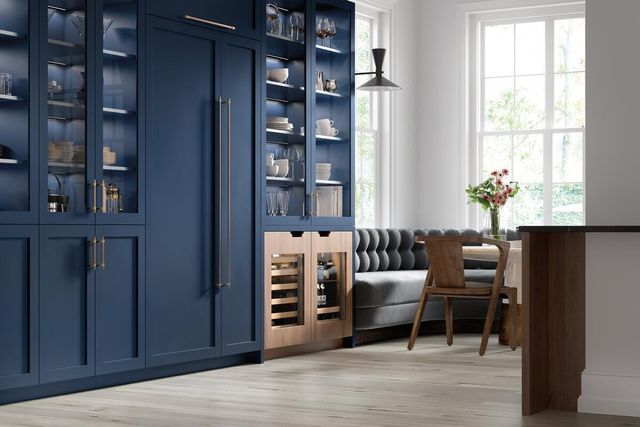
A beverage refrigerator, also sold as a beverage center or a drink fridge, is a compact refrigeration unit built for one job: holding cans and bottles at drinking temperature behind a glass door. It is not a small version of your kitchen refrigerator. There is no freezer, no produce humidity control, and usually no automatic defrost cycle designed around raw food storage.
The clearest difference is temperature. Refrigerators for beverages typically run in the mid thirties to low forties, which is where beer, soda, sparkling water, and mixers taste right. A wine cooler holds a warmer band, roughly the mid forties through the mid sixties, because wine stored at soda temperature dulls and can eventually suffer. A combination wine and beverage refrigerator splits the cabinet into two independently controlled zones so one side stays cold and the other stays cellar-warm.
Shelving Changes Everything About Capacity
Look inside before you judge two units by cubic feet alone. Beverage models use flat sliding wire or glass shelves that let you stack cans in rows and stand tall bottles upright. Wine models use contoured wooden racks shaped to cradle 750ml bottles on their sides, which is excellent for wine and nearly useless for a twelve pack.
That single design difference is why a wine unit and a beverage unit with identical exterior dimensions can differ enormously in what they actually hold. It is also why combination units store fewer of both than a single-purpose unit of the same width.
Display Features Standard Refrigerators Skip
- Glass doors, often UV-tinted or double-paned, so the contents are visible without opening the door
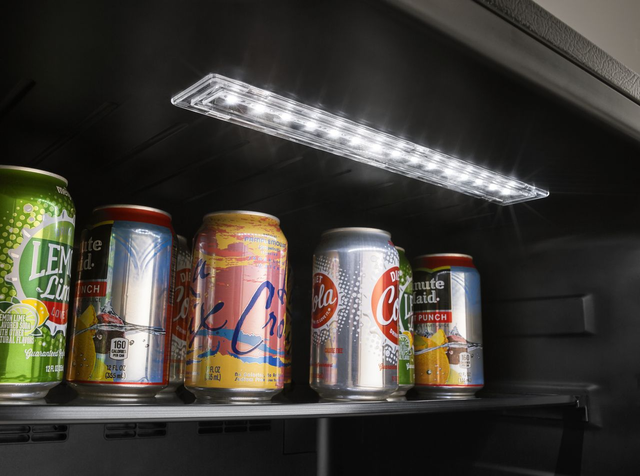
- Interior LED lighting in white or blue, sometimes with adjustable brightness
- Sliding full-extension shelves that bring the back row forward instead of making you reach
- Digital temperature displays on the door or the interior wall
Here is the quick decision cue. If the majority of what you chill is canned or bottled and wine is an occasional bottle or two, buy a beverage-only unit and give yourself the flat shelving. If you keep a dozen bottles of wine on hand year-round and also want cold drinks, a dual zone wine and beverage cooler earns the compromise. Buying the dual zone unit for two bottles of wine costs you shelf space every single day.
Read More: 7 Best Counter Depth Refrigerators | GE vs LG Refrigerator: 4 Key Differences That Will Help You Choose
How to Size a Beverage Refrigerator for Your Space and Your Household
Width classes in this category are predictable, and knowing them saves you from falling for a model that will never fit the opening you have. Compact countertop units run small enough to sit on a counter or a bar top and hold a modest stash. From there, undercounter models cluster around 15 inches, 18 inches, and 24 inches wide, with 24 inches being the mainstream size for a kitchen or bar cutout. Full-height column-style units go taller and hold considerably more, but they need a dedicated cabinet run.
Capacity claims deserve a skeptical eye. A manufacturer’s can rating assumes standard 12-ounce cans arranged in tidy rows with no wasted space. Real households store a mix: tall slim cans, 16-ounce bottles, 2-liters lying on their sides, growlers standing upright, and a few bottles of white wine. Every tall item you add costs you a full shelf level.
Measuring the Opening Correctly
- Measure the cabinet opening width at the top, middle, and bottom, since older cabinet runs are rarely square.
- Measure depth from the back wall to the front edge of the cabinet face, then confirm the door and handle have room to project past the counter edge.
- Measure height from the floor to the underside of the countertop, including any subfloor or tile you plan to add later.
- Check the door swing against adjacent walls, appliance handles, and the path people walk through.
- Confirm whether the door is reversible if the unit lands in a corner or a galley layout.
Reversible doors matter more than shoppers expect. A right-hinge door in a left-hand corner turns a convenient beverage center into an obstacle you have to step around every time you open it.
A Simple Capacity Rule
Match capacity to how you actually entertain rather than to the largest unit that fits. A couple or a small household that keeps drinks on hand for the week is well served by a 15 inch or 18 inch undercounter unit. A family of four that hosts occasionally lands naturally at 24 inches. A household that hosts regularly, keeps a game-day rotation, or runs a pool and patio through the summer should size up to a 24 inch model with maximum shelving or plan for a second unit outdoors.
Built-In, Freestanding, or Outdoor Rated: Choosing the Right Installation Type
This is where the expensive mistakes happen, and they are almost always avoidable. There are three installation categories, and they are not interchangeable.
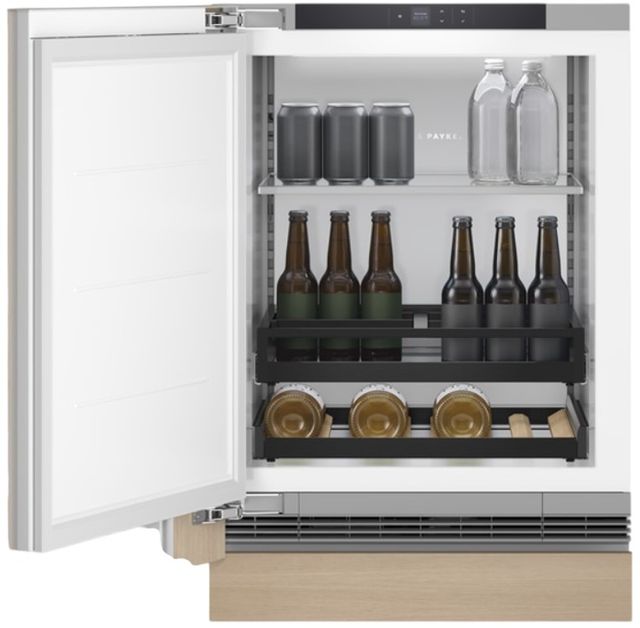
Freestanding units vent from the rear or the sides. They need open air around the cabinet, and they are meant to stand at the end of a counter run, in a home office, or in a finished basement bar with breathing room. Built-in or undercounter units vent forward through a grille in the toe kick, which lets them sit flush in a cabinet cutout with zero side clearance. Outdoor rated units are built-in capable and additionally sealed and finished to handle weather, humidity, and wide temperature swings.
The Mistake That Kills Compressors
Installing a freestanding model into a cabinet cutout is the single most common and most expensive error in this category. With the rear vent blocked by a cabinet wall, the compressor cannot shed heat. It runs longer, then constantly, then it fails, usually outside the window when anyone connects the failure to the installation. Manufacturers exclude that damage from warranty coverage because the unit was installed against its own specification.
If the unit is going into cabinetry, buy a model the manufacturer lists as built-in capable. There is no workaround, no clearance trick, and no fan accessory that makes a rear-vented unit safe inside a sealed box.
Outdoor and Accessibility Requirements
Patio and outdoor kitchen installations have their own list. Outdoor rated units use sealed electrical components, marine-grade or weather-resistant stainless steel, and gaskets rated for temperature extremes, and they publish an ambient operating range you should actually read. They also require a GFCI-protected outlet. For accessible kitchen designs and lower counter runs, several manufacturers offer ADA compliant height models that fit under a 34 inch counter.
On electrical, most of these units run on a standard 115-volt outlet, but a dedicated circuit is the better practice, especially outdoors or in a bar run that already carries an ice maker and a blender. Our team confirms circuit availability before delivery day rather than after.
Confirm Before You Order
- The exact cabinet opening in all three dimensions, measured twice
- Whether the model is rated built-in, freestanding, or outdoor
- Hinge side, and whether the door is field-reversible
- Outlet location, type, and whether it is GFCI protected
- Floor level and whether the unit will need leveling legs adjusted
- Clear delivery path width, including doorways and any stair turns
Cooling Technology, Temperature Zones, and Noise Levels Explained
Two cooling systems dominate this category, and the difference is not a detail. Compressor cooling works the same way your kitchen refrigerator does, using refrigerant and a compressor to move heat out of the cabinet. Thermoelectric cooling uses a solid-state Peltier element with no compressor and no refrigerant, moving a smaller amount of heat with almost no vibration.
Compressor units pull down faster, hold colder set points, and keep working when the surrounding room is warm. They cost slightly more energy and produce a low hum and a faint vibration you can feel if you rest a hand on the cabinet. Thermoelectric units are quiet enough for a bedroom or a home office, but their cooling capacity is limited and measured relative to the room around them.
Single Zone Versus Dual Zone
A single zone unit holds one temperature throughout the cabinet, which is the right answer for anyone storing only cans and bottles. A dual zone unit runs two independently set compartments, which is worth the money only if you genuinely store two categories that want different temperatures. Practical target ranges look roughly like this:
- Beer, soda, sparkling water, and mixers: mid thirties to low forties
- Kombucha, cold brew, and juice: upper thirties
- White wine and sparkling wine: mid forties to low fifties
- Red wine: mid fifties to mid sixties
Noise, and Where It Matters
Decibel ratings in this category cluster in a narrow band, but placement changes how a given rating feels. A compressor unit under a kitchen island disappears into normal household noise. The same unit in a home office where you take calls, or in a bedroom, becomes noticeable within a week. Look for fan-forced air circulation, digital touch controls, and temperature memory that restores your set point after a power outage, since a summer outage on the Bakersfield grid should not reset your unit to factory default.
The nuance almost nobody mentions: every one of these units is rated to hold its set point within a stated ambient temperature range. Push the surrounding room past that range and the unit does not fail dramatically, it simply drifts warmer while running constantly. That is why the same model performs beautifully in a conditioned kitchen and disappoints in an uninsulated garage.
Beverage Refrigerator Types Compared Side by Side
Find the row that describes where the unit will actually live, then read across. Location and ventilation decide this purchase far more often than capacity does.
| Type | Typical Width | Approx. Can Capacity | Ventilation Needed | Best-Fit Location | Price Tier |
|---|---|---|---|---|---|
| Compact countertop | Under 18 inches | Roughly 40 to 80 cans | Rear and side clearance | Office, dorm, bedroom | Entry |
| Freestanding undercounter | 15 to 24 inches | Roughly 80 to 150 cans | Rear or side clearance | End of a counter run, basement bar | Entry to mid-range |
| Built-in undercounter | 15 to 24 inches | Roughly 100 to 185 cans | Front vent, flush install allowed | Kitchen island, wet bar, butler’s pantry | Mid-range to premium |
| Dual zone wine and beverage | 15 to 24 inches | Fewer cans, plus bottle racks | Usually front vent | Kitchen or entertaining space | Mid-range to premium |
| Outdoor rated | 15 to 24 inches | Roughly 80 to 150 cans | Front vent, weather sealed | Covered patio, outdoor kitchen | Premium |
If your unit is going into a cabinet cutout or outdoors, the ventilation column narrows your options before any other spec does, and that is the healthiest way to shop this category.
Features, Finishes, and Design Details Worth Paying For
Door and finish choices set the tone of the whole installation. Stainless steel is the default and matches nearly every appliance package. Black stainless suits darker kitchens and shows fewer smudges in some finishes. Panel ready fronts accept a custom door panel that matches your cabinetry, which makes the unit disappear into the run entirely, and that is often the right call in a kitchen where the beverage center sits in a sightline from the living room.
Glass door tint deserves attention too. UV-tinted and double-paned glass reduces heat gain and slows light damage to anything sensitive stored inside, which matters more on a west-facing wall in the valley than it does in a shaded basement.
Features That Change Daily Use
- Field-reversible doors: Lets the same unit work on either side of a corner, which is genuinely useful if you move or remodel.
- Soft-close hinges: Keeps the door from being left ajar in a busy kitchen, which is the most common cause of a warm cabinet.
- Full-extension shelving: Brings the back row out to you instead of making you reach past the front cans.
- Lockable doors: Practical for garages, home offices, and households with kids or teenagers.
- Door ajar and high temperature alarms: Tell you about a problem while it is still a nuisance rather than a loss.
Features That Mostly Add Cost
Integrated pocket handles look excellent on a panel ready installation and do very little on a standalone stainless unit. Color-changing interior lighting photographs well and adds heat if you leave it running bright. Sabbath mode is meaningful for households that observe it and irrelevant otherwise. Spend your budget on venting compatibility, shelving quality, and finish first, since those are the three you interact with every day.
Shelf material matters more than the spec sheet suggests. Wire shelves are lighter and drain spills through, while glass shelves wipe clean instantly and contain a burst can, which anyone who has opened a shaken soda understands.
Read More: Compare Bosch vs KitchenAid French Door Refrigerators | The Best Frigidaire Gallery Refrigerator Models Reviewed
Refrigerators for Beverages Pros and Cons Homeowners Should Weigh
A dedicated beverage unit solves a real problem, and it also adds a second refrigeration appliance to your home with everything that implies. Knowing both sides before you shop keeps expectations honest and keeps you from over-buying capacity you will not use.
Pros
Frees serious space in the main refrigerator
Two full shelves and most of a door come back to groceries, which is the benefit owners mention first.
Colder and steadier drink temperatures
A unit that is not opened forty times a day for food holds its set point far better than a kitchen refrigerator does.
Better entertaining flow
Guests serve themselves from a bar, island, or patio unit without traffic through the kitchen work zone.
Visible contents through glass
Nobody stands with a door open searching, which saves energy and keeps the cabinet cold.
Flexible placement
Undercounter, freestanding, or outdoor, so the unit goes where people actually gather rather than where the plumbing dictates.
Cons
Added energy use
A second refrigeration appliance runs year-round, and glass doors transfer more heat than a solid door does.
Upfront and installation cost
Built-in models cost more than freestanding, and cabinet modification or a new circuit adds to the total.
Heat and noise in small rooms
A compressor unit sheds heat into the room it occupies, which is noticeable in a closed home office or a small den.
Energy Use, Maintenance, and Long-Term Ownership Costs
Four things drive energy consumption in refrigerators for beverages: heat transfer through the glass door, the ambient temperature of the room, how often the door opens, and how cold you set it. Only two of those are under your control day to day, which is why placement is the most consequential efficiency decision you make.
ENERGY STAR certification does appear in this category, though coverage is thinner than in full-size refrigeration. Where a certified model is available at a comparable price, take it, but understand what it means realistically. The annual operating cost difference between a certified and non-certified undercounter unit is modest in absolute dollars, and it compounds quietly over ten years rather than showing up as a dramatic line on one bill.
Practical Maintenance
- Vacuum the condenser coils and the toe-kick vent grille so the unit can shed heat efficiently.
- Wipe the door gasket with mild soapy water and check that it seals evenly all the way around.
- Level the unit so the door closes on its own from a half-open position.
- Clean interior spills promptly, since sugary residue in a low-airflow cabinet turns into odor fast.
- Set the temperature once and leave it, rather than adjusting it up and down seasonally.
Warranty coverage in this category usually splits into a longer term on the sealed system, meaning the compressor and refrigerant circuit, and a shorter term covering parts and labor on everything else. Register the unit at purchase. Manufacturers ask for proof of purchase and installation date on sealed system claims years later, and a registered serial number turns a frustrating claim into a phone call.
Read More: Bakersfield Homeowner’s Guide: When to Repair vs. Replace Your Appliances | What’s Cool Now: Trending Refrigerators in Bakersfield, CA
What Bakersfield and Fresno Heat Does to a Beverage Refrigerator
Nothing tests this appliance category like a Central Valley summer. Bakersfield strings together weeks above 100 degrees, an attached garage can sit at 115 to 120 degrees on a July afternoon, and even a covered patio in Fresno holds heat well past sunset. Every one of these units publishes an ambient operating range, and valley conditions push right past the top of that range in the exact spots where people most want a drink fridge. The result is not a dead appliance on day one, it is a unit that runs nearly continuously all summer, never quite reaches its set point, and wears out its compressor years early. Add the fine agricultural dust that settles across the valley and coats a condenser coil, and you have the two failure paths our service department sees most.
Here is the maintenance habit our installers pass along to every valley customer: pull the toe-kick grille and vacuum the condenser coil twice a year instead of once, timed to late spring before the first heat wave and again in October after the dust settles. A coil that has been breathing valley air is measurably dirtier at six months than the annual schedule in the manual assumes, and a clean coil is the cheapest compressor insurance there is.
- Choose compressor cooling over thermoelectric for any garage, patio, or sunroom installation in Kern or Fresno County.
- Check the published ambient range against realistic summer conditions in that exact room, not the whole house average.
- Keep the unit out of direct west-facing afternoon sun, even under a patio cover, since radiant heat on a glass door works against you all evening.
- Confirm outdoor rated construction and a GFCI outlet for anything past the back door, including covered outdoor kitchens.
- Leave the manufacturer’s specified front-vent clearance clear of stored items in a garage installation.
- Expect a hot-garage unit to hold a slightly warmer set point in August than it does in January, and set expectations accordingly.
Top Refrigerators for Beverages Available at Urner’s
The lineup below spans the categories covered above, from mainstream stainless undercounter units to panel ready models built to disappear into cabinetry. Every one of these is a 24 inch class beverage center, which is the size that fits the standard cabinet cutout in most valley kitchens and bars. Read the descriptions with your own space in mind, since the right pick depends far more on where it goes than on which badge is on the door.
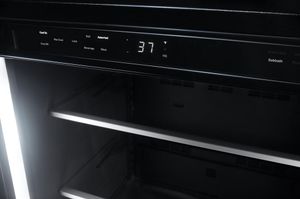
JennAir® RISE™ 5.0 Cu. Ft. Stainless Steel Beverage Center
Shop Undercounter Beverage Centers
A kitchen island cutout in a newer Bakersfield home is exactly what this unit was drawn for. JennAir’s RISE design language pairs a bold stainless face with commercial-inspired hardware, so the beverage center reads as a deliberate part of the appliance package rather than an add-on. At 5.0 cubic feet it holds a serious mix of cans and bottles for a household that hosts, and the glass door lets guests see what is inside without standing there with it open. Best suited to a premium kitchen where the other appliances already carry a matching design vocabulary.
Top Features
- 5.0 cubic foot capacity: Enough room for a mixed rotation of cans, bottles, and 2-liters in a standard 24 inch opening.
- RISE design styling: Bold stainless and commercial-style hardware that coordinates with a full JennAir appliance suite.
- Glass door display: Contents stay visible, so the door opens once instead of three times.
- Stainless steel construction: A durable, familiar finish that works in nearly any kitchen or bar design.
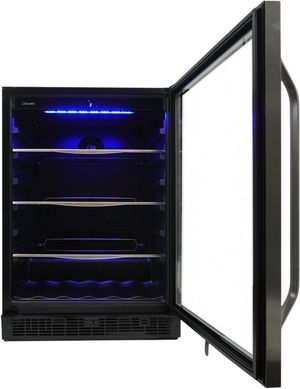
Silhouette® Professional™ Riccotta 24” Stainless Steel Beverage Center
Shop Built-In Beverage Centers
Basement bars, game rooms, and butler’s pantries are where the Silhouette Professional line tends to land. Silhouette builds specialty refrigeration as its primary business rather than as a sideline to a full appliance catalog, and the Professional series is aimed at built-in beverage duty specifically. The 24 inch stainless cabinet drops into the standard undercounter opening, and the finish holds up in a room where the unit gets opened by guests rather than by one careful owner. A strong choice for an entertaining space that runs hard on weekends and sits quiet midweek.
Top Features
- 24 inch built-in width: Fits the mainstream undercounter cabinet opening without custom cabinetry work.
- Specialty refrigeration focus: Built by a manufacturer whose core business is compact and beverage refrigeration.
- Stainless steel exterior: Wipes clean easily in a bar or game room where a lot of hands touch the door.
- Professional series build: Positioned for entertaining spaces rather than occasional light-duty use.
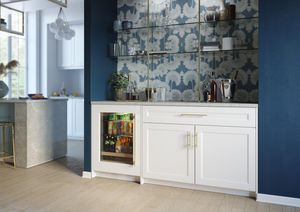
Sub-Zero® Designer 5.5 Cu. Ft. Custom Panel Ready Smart Beverage Center with Right Hinge Glass Panel Door
Shop Built-In Beverage Centers
When the beverage center sits in full view from the living room, disappearing is the goal. This Sub-Zero Designer unit accepts a custom cabinet panel around its glass door, so the front matches your cabinetry exactly instead of interrupting the run with a stainless rectangle. At 5.5 cubic feet it is the largest capacity in this group, it is a smart-connected unit, and the door is right-hinged, which decides where it can go in a corner. This is the premium pick for a designed kitchen or a high-end bar.
Top Features
- Custom panel ready front: Takes a cabinet panel so the unit blends into the surrounding millwork.
- 5.5 cubic feet: The largest stated capacity in this lineup, with room for a full entertaining rotation.
- Smart connectivity: Connected controls and monitoring from a brand known for refrigeration engineering.
- Right hinge glass panel door: Fixed hinge orientation, so confirm your corner and traffic path before ordering.
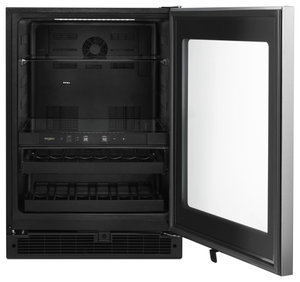
Whirlpool® 24” 5.2 Cu. Ft. Fingerprint Resistant Stainless Steel Beverage Center
Shop Undercounter Beverage Centers
Families with kids reaching for drinks all day should start here. The fingerprint resistant stainless finish is not a marketing throwaway on a glass-door appliance that gets touched constantly, and it keeps the front looking clean between wipe-downs in a busy kitchen. At 5.2 cubic feet in a 24 inch cabinet, capacity is generous for the price position, and Whirlpool parts and service availability across the valley is as strong as it gets. A practical mainstream choice for a family kitchen, a pool house, or a shop office.
Top Features
- Fingerprint resistant stainless: Holds a clean look in a household where the door gets opened constantly.
- 5.2 cubic foot capacity: Generous room in a standard 24 inch width for cans, bottles, and mixers.
- Mainstream price position: Beverage center convenience without stepping into the premium tier.
- Widely supported brand: Parts and local service availability are excellent throughout Bakersfield and Fresno.
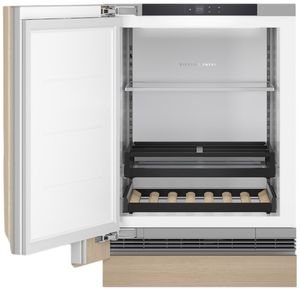
Fisher & Paykel Series 9 24” Panel Ready Built In Beverage Center
Shop Built-In Beverage Centers
Integrated kitchens built around clean, unbroken cabinetry are the natural home for this one. Fisher & Paykel’s Series 9 is the brand’s upper tier, and this unit is both panel ready and specified as built in, which means it vents forward and can sit flush in a cutout with a custom front applied. That combination is what lets a designer hide refrigeration inside a continuous cabinet run. Well matched to a remodel where the whole kitchen was drawn at once and the appliances were chosen to disappear.
Top Features
- Panel ready front: Accepts a custom cabinet panel for a fully integrated look.
- Built in ventilation: Vents forward, so it installs flush in cabinetry as designed.
- Series 9 tier: Fisher & Paykel’s premium line, aimed at designed and integrated kitchens.
- 24 inch standard width: Fits the common undercounter opening used across kitchen and bar millwork.
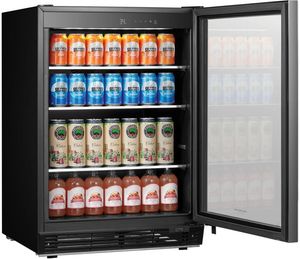
Frigidaire® Gallery 24” 5.4 Cu. Ft. Stainless Steel 185 Can Beverage Center
Shop Undercounter Beverage Centers
Households that host in volume should look hard at the can rating on this one. Frigidaire Gallery lists this 5.4 cubic foot unit at 185 cans, which is the highest published capacity in this group and the clearest answer for a game-day rotation, a pool party, or a family that buys drinks by the case. The Gallery series sits in Frigidaire’s step-up tier, so the finish and control set are a level above the base line. A sensible pick for a garage bar, a covered patio bar area, or a large family kitchen.
Top Features
- 185 can rated capacity: The highest published can count in this lineup, sized for households that host often.
- 5.4 cubic feet: Large interior volume within a standard 24 inch cabinet width.
- Gallery step-up series: A more refined finish and control set than Frigidaire’s entry line.
- Stainless steel front: Coordinates with the stainless appliance packages most valley kitchens already run.
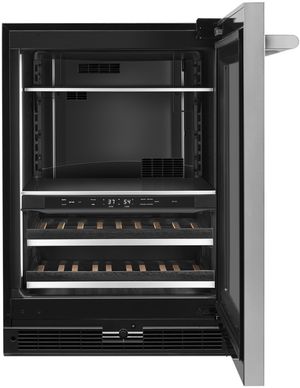
JennAir® RISE™ 24” Stainless Steel Built-In Beverage Center
Shop Built-In Beverage Centers
A wet bar or entertaining wall that needs the unit to sit perfectly flush is the scenario here. This JennAir RISE model is specified as built-in, so it vents through the front and installs into a cabinet cutout without the side clearance a freestanding unit demands. The stainless RISE styling carries the same bold hardware as the rest of the JennAir suite, which keeps a bar area looking coordinated rather than assembled from parts. Choose this one when flush installation and design consistency both matter and you do not need a custom panel.
Top Features
- True built-in ventilation: Front venting allows a flush cabinet installation with no side air gap.
- RISE styling: Matches the design language of a broader JennAir appliance package.
- 24 inch cabinet width: Drops into the standard undercounter opening used in most bar millwork.
- Stainless steel finish: A durable front that stands up to heavy use in an entertaining space.
Choosing the Right Refrigerators for Beverages Starts at Urner’s
Measure the opening first, match the installation type to how the unit will vent, then choose your zones and cooling technology based on where the appliance actually lives. Those three decisions in that order will steer you to the right model faster than any spec comparison, and they are the ones that keep a beverage center working through a valley summer instead of struggling through it.
Come see them in person. Shop refrigerators for beverages online at Urner’s or visit us in Bakersfield or Fresno to compare finishes, glass tints, and door styles side by side, and to see how a panel ready front changes a kitchen before you commit to one. Our appliance specialists know these lines, our team measures your space and confirms your outlet before delivery day, professional installation is handled by people who do this every week, and our service department is right here in the valley years after the sale. That is a different experience from a warehouse shipment left at the curb with a manual on top and a call center number to dial when something goes wrong.
Frequently Asked Questions about Refrigerators for Beverages
Most refrigerators for beverages perform best set between roughly 34 and 40 degrees Fahrenheit, which is the range where beer, soda, sparkling water, and mixers taste the way they should. If the unit is a dual zone model holding wine as well, set the beverage zone in that cold band and the wine zone in the mid forties for whites or the mid fifties for reds.
No, a freestanding beverage refrigerator should never be installed into a closed cabinet cutout, because it vents from the rear or sides and needs open air to shed heat. Blocking those vents makes the compressor run continuously and fail early, and manufacturers generally exclude that damage from warranty coverage since the installation violates the unit’s own specification.
A 15 inch beverage refrigerator typically holds somewhere between 80 and 100 standard 12-ounce cans, depending on shelf configuration and how the interior is arranged. That number drops quickly once you add tall slim cans, 2-liter bottles, or wine bottles, so plan on real usable capacity being lower than the published figure for a mixed household.
A beverage center holds cans and bottles on flat shelving at colder temperatures in the mid thirties to low forties, while a wine cooler uses contoured racks and holds warmer cellar temperatures from the mid forties into the mid sixties. The shelving difference matters as much as the temperature, since wine racks waste space on cans and flat shelves cannot cradle bottles on their sides.
Most beverage refrigerators run on a standard 115-volt household outlet and do not strictly require a dedicated circuit, but a dedicated circuit is the better practice. It matters most on a bar run that already carries an ice maker, a blender, and lighting, and outdoor installations additionally require a GFCI-protected outlet.
A quality beverage refrigerator installed correctly in a conditioned space commonly runs 8 to 12 years, with the compressor and sealed system usually determining the end of its life. Units placed in hot garages or on unshaded patios without an appropriate ambient rating tend to fall well short of that, which is why placement and coil cleaning matter more than brand for longevity.
Why Trust Urner's and Urner's Mattress?
Urner’s started on the back of a bicycle - yup! A bicycle! David E. Urner, a local high school teacher, who spent his summer months selling Wear Ever cookware off the back of a bicycle (think 100+ degrees). David teamed up with another local teacher, Errol P. Janes to create “a new type of store – one that would cater exclusively to providing an easier way of living for the women of Kern County”, and on September 19, 1919, Home Appliance Store was opened to the public. The store boasted a rather impressive selection of “modern” appliances, including a washing machine, a freezer, a gas range, an automatic dishwasher, and an assortment of small appliances. Since then, Urner’s has expanded selections to appliances, furniture, mattresses and cabinetry!
For nearly one century, the Urner family and Urner’s business have both been an integral part of Bakersfield and Kern County, with contributions to community (Better Business Bureau, Sister City Projects, Bakersfield Symphony), charity (Ronald McDonald House, St. Jude’s Dream Home, House of Hope) and education (CSU Bakersfield, Ray Dezember Leadership Development Center. Explore the website, visit the store, or join us socially. We’re all about home, all about fun, and all about you… and we’re ready to make you a part of the Urner’s family today.
Shop Refrigerators at Urner’s
Stop by any of the 6 Urner’s and Urner’s Mattress locations in Bakersfield, CA to see what a difference buying local with an experienced staff can make. Our friendly experts are always happy to help you explore the best dining room cabinets for your living room — whether you call us at 661-396-8400, use our online chat feature, or visit us in person.