



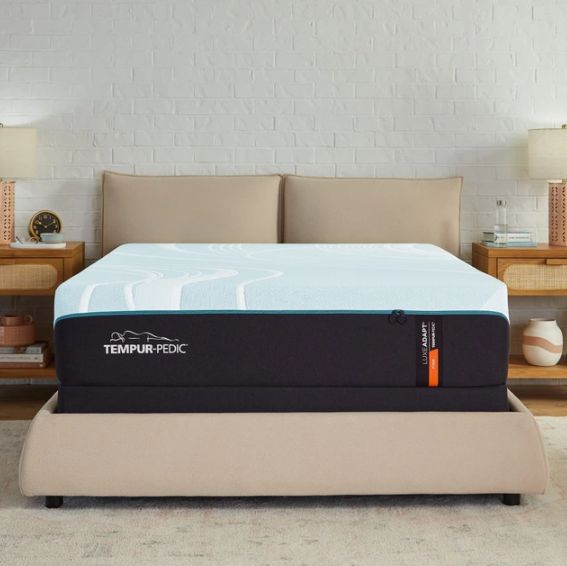
You wake at 3 a.m. with a numb shoulder and an ache running from your hip into your lower back, and you have already rolled from your side to your back twice trying to find a position that does not hurt. The mattress under you has a shallow trough worn where you sleep, and every time you shift, the springs push back at the two or three spots carrying all of your weight. Morning stiffness has quietly become normal. That specific pattern of pressure point pain is the reason most people start looking at Tempur-Pedic mattresses in the first place, and it is a fixable problem rather than a permanent one.
Here is the good news. The difference between a mattress that hurts and one that does not usually comes down to one thing, which is whether the surface redistributes your weight or resists it. At Urner’s, we have helped Central Valley families sort through this for years, and the process is far more straightforward than the marketing suggests. This guide walks through how TEMPUR material actually works, why it relieves pressure the way it does, what motion isolation means for couples, how the cooling models differ, how the collections compare on firmness and profile height, and how to match a model to your sleeping position, your body weight, and your budget.
Feel the Difference Before You Take It Home
Lie down on the Tempur-Pedic lineup in our Bakersfield showroom and compare firmness levels and cooling tiers side by side with help from our team. Every mattress comes with local delivery, setup, and old mattress removal.
Explore Tempur-Pedic mattressesKey Takeaways
- TEMPUR material redistributes weight instead of pushing back: It responds to body weight and body heat and recovers slowly, which spreads your load across the whole surface rather than concentrating it on the shoulder and hip.
- Firmness and profile height matter more than collection prestige: Moving up a collection mostly buys more TEMPUR material depth and stronger cooling, not an entirely different feel.
- Cooling is a real decision, not marketing: Standard collections use a cool-to-the-touch cover, while the breeze models add deeper cooling layers that matter during a triple-digit Central Valley summer.
- Ten to fifteen minutes of testing beats thirty seconds: Foam that feels good on first contact can feel entirely different once it warms and conforms, which is exactly what a showroom visit is for.
The Science Behind Why Tempur-Pedic Mattresses Feel Unlike Anything Else
TEMPUR is not a generic memory foam with a brand name stamped on it. It is a proprietary viscoelastic material that grew out of NASA-funded research into cushioning that could spread the load on a body under stress, and the company has spent decades refining the formula since. That single material choice drives nearly every benefit covered in this article.
Three properties matter to you as a shopper, and all three are easy to feel once you know what to look for:
- Body-weight responsive: the material compresses in proportion to how much load each part of your body puts on it, so a heavy hip sinks further than a light calf.
- Body-heat responsive: it softens where your skin warms it and stays firmer where it stays cool, which is why the surface molds to your outline rather than a generic body shape.
- Slow recovering: it returns to shape gradually instead of springing back, so it holds the contour instead of fighting you for it.
Put those together and you get redistribution rather than resistance. An innerspring bed supports you at the points where coils meet your body, and those coils push upward with real force. A budget memory foam bed softens, but the cell structure is usually less dense, so it compresses through faster and reaches the harder support layer underneath sooner. A hybrid splits the difference by putting foam over pocketed coils, which adds airflow and bounce but keeps some point pressure in the system. TEMPUR material is denser and slower than commodity foam, and that density is a large part of why the price sits higher than a comparable hybrid.
Here is a detail almost nobody mentions. Because the material reacts to heat, a Tempur-Pedic mattress feels slightly firmer in a cold bedroom and slightly softer in a warm one. In a Bakersfield home where the air conditioning runs hard all summer and the bedroom sits at 68 degrees, the same bed you tested in a 74-degree showroom will read a touch firmer for the first few minutes until your body heat gets into it. That is normal material behavior, not a defect, and it settles within minutes.
A few terms you will see on the tags are worth knowing. TEMPUR-ES is the softer comfort formulation used in the upper layers of several models to add give at the surface. TEMPUR-APR is the advanced pressure relief material found in the premium collections, engineered for deeper conforming. CertiPUR-US certification covers foam content and emissions testing, which is the standard shoppers ask about most often when they have kids or allergies at home.
Read more:
Wake Up Without Hip, Shoulder, or Lower Back Pressure Points
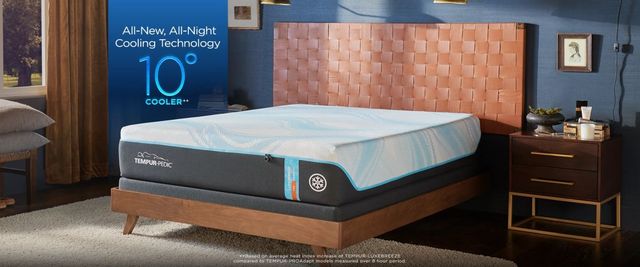
Pressure relief is the ability of a mattress to spread your body weight across the entire contact surface instead of concentrating it on the few spots that stick out the most. On a firm, unyielding bed, your shoulder and hip carry a disproportionate share of your weight, which restricts blood flow and triggers the small movements that pull you out of deep sleep. A conforming surface changes the math by increasing the contact area, so the load per square inch drops everywhere.
In practice, that means your shoulder and hip sink into the material while your waist and lumbar curve get filled in rather than left hanging over a gap. The spine stays closer to the neutral line it holds when you are standing. Sleeping position changes which part of that equation matters most.
Side Sleepers
Side sleeping puts the most concentrated pressure on the smallest area, since the shoulder and hip carry nearly everything. Look at softer to medium feels, roughly 4 to 6 on the 1 to 10 scale, and at models with deeper comfort layers such as the ProAdapt and LuxeAdapt collections in their softer configurations. The goal is enough sink at the shoulder and hip that the spine runs straight from neck to tailbone with no upward bow at the waist.
Back Sleepers
Back sleepers need the lumbar gap filled without letting the hips drop below the shoulders. Medium to firm, roughly 5 to 7, is the usual target. TEMPUR material does something springs struggle with here, since it flows into the small of the back instead of bridging over it.
Stomach Sleepers
Stomach sleeping is the position most likely to go wrong on a soft bed. When the hips sink first, the lower back arches all night and you wake sore. Firmer options, roughly 6 to 8, keep the pelvis in line, and a firm configuration in the ProAdapt or LuxeAdapt range is generally the safer choice.
Combination Sleepers
If you change position several times a night, look at medium feels with a hybrid build. The coil unit adds a little responsiveness, which makes repositioning easier than on an all-foam bed that holds an impression longer.
Body weight shifts every one of those recommendations, and most buying guides skip it entirely. A lighter sleeper often does not generate enough compression to get real contouring out of a firm model, so a softer feel usually serves them better than the chart suggests. A heavier sleeper compresses further and faster, so a thicker profile with more material to work through, plus a firmer feel, prevents that bottomed-out sensation where you feel the support core through the comfort layers.
If pressure has turned into pain, better weight distribution and a more neutral spine can take real pressure off the hip and shoulder joints and reduce morning stiffness. Plenty of people with sciatica-type discomfort report that a conforming surface is easier on them than a firm one. That is a comfort and support benefit, not a medical treatment, and anything persistent belongs in a conversation with your doctor.
One last thing about testing. Lie down in the position you actually sleep in, with a pillow at the loft you actually use, and stay there ten to fifteen minutes. Thirty seconds tells you what the cover feels like and nothing else, because the material has not warmed up or finished conforming yet. That is precisely what our showroom floor is for.
Motion Isolation and Support Benefits That Change How Couples Sleep
Motion isolation is where memory foam consistently outperforms every other category, and the reason is mechanical. When your partner rolls over on a connected coil system, that energy travels laterally through the coil network and arrives on your side of the bed. TEMPUR material absorbs and dampens movement locally instead, so the compression stays roughly where it started.
The real-world situations this solves are specific:
- A partner leaving for a 5 a.m. shift while you have three more hours to sleep.
- A restless sleeper who shifts position a dozen times a night.
- A dog or cat that jumps on and off the bed without warning.
- A light sleeper who surfaces every time someone changes sides.
Support and surface softness are two different things, and confusing them causes a lot of bad mattress purchases. Surface softness is what your hand feels in the first inch. Support is what the deeper layers and the core do to hold your spine in line over eight hours. A soft Tempur-Pedic mattress can still deliver strong support, because the softness lives in the comfort layers while the support material underneath does not give way. That is also why these beds tend to hold their shape rather than developing a deep body impression in year three.
Two trade-offs deserve an honest mention. Bounce is low, and repositioning takes a bit more effort than on a spring or hybrid bed, which some sleepers love and others never warm to. Edge support varies by model, and the softest configurations feel less rigid at the perimeter than a coil bed with a reinforced edge. Neither is a defect. They are fit considerations, and both are easy to check in ten minutes by sitting on the edge and rolling from one side to the other.
There is also a small daily benefit that never makes the spec sheet. Foam beds are silent. No coil squeak when you sit down, no creak when you turn over at 2 a.m.
Find the Right Tempur-Pedic Model for Your Sleep Style and Budget
The lineup can look confusing from the outside because the names run together. Laid side by side, the differences are actually simple: how much TEMPUR material sits above you, which firmness options exist, and how hard the model works to move heat away.
| Collection | Firmness Options | Profile Height | Cooling Level | Best For | Typical Queen Price Range |
|---|---|---|---|---|---|
| TEMPUR-Cloud | Medium soft, about 4 | 10 inches | Cover only | Entry-level foam buyer testing the material | 1,500 to 2,200 dollars |
| TEMPUR-Adapt | Medium, about 5 to 6 | 11 inches | Cool-to-touch cover | First-time Tempur-Pedic owner wanting a safe middle feel | 2,000 to 2,800 dollars |
| TEMPUR-ProAdapt | Soft, medium, or firm | 12 inches | Cool-to-touch cover | Sleepers who want a real choice of firmness | 3,000 to 3,800 dollars |
| TEMPUR-LuxeAdapt | Soft or firm | 13 inches | Cool-to-touch cover | Sleepers wanting maximum contouring depth | 4,000 to 4,800 dollars |
| TEMPUR-ProBreeze | Medium or medium hybrid | 12 inches | Meaningful cooling | Hot sleepers who want a moderate step up | 4,000 to 4,800 dollars |
| TEMPUR-LUXEbreeze | Soft or firm | 13 inches | Strongest cooling | Hot sleepers who also want depth | 5,000 to 6,000 dollars |
Here is the single most useful thing to take from that table. Firmness choice and profile height will affect how you sleep far more than which collection badge is on the tag. Stepping up a collection mostly buys you more TEMPUR material depth and stronger cooling technology, so if you are a lighter side sleeper who never runs warm, a well-chosen mid-tier model can beat a premium one that is firmer than you need. Pricing moves constantly with size and promotion, so treat those ranges as a planning tool and confirm current pricing and current warranty terms with our team before you budget.
TEMPUR-breeze Cooling Technology and Why Hot Sleepers Should Care
Memory foam earned a reputation for sleeping hot, and that reputation was fair fifteen years ago. Dense foam wraps a lot of surface area around you and traps the heat your body gives off, and a solid block of material does not move air the way a coil unit does. Rather than dismissing the concern, it is worth understanding what the current models actually do about it.
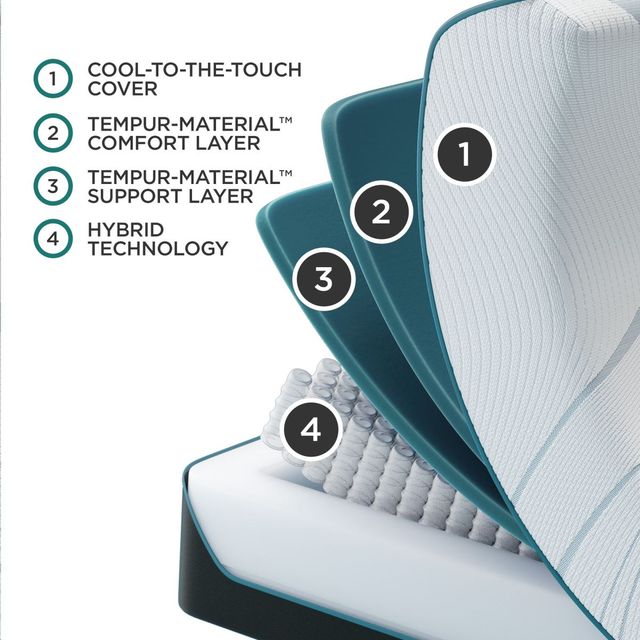
The cooling stack works in layers:
- SmartClimate Dual Cover System: a zip-off outer cover with a cool-to-the-touch surface, so first contact feels cool rather than neutral.
- Phase change material: it absorbs heat as you first lie down, which takes the edge off that warm-up period.
- Ventilated internal airflow: channels and more open material structures let heat move away from your body instead of pooling under it.
- Deeper cooling comfort layers: exclusive to the breeze collections, this is where the meaningful difference lives.
The tiers sort out cleanly. Standard collections give you a cool-to-the-touch cover, which is enough for a lot of sleepers. ProBreeze steps into genuine cooling performance. LUXEbreeze is the strongest cooling in the lineup. One thing shoppers rarely hear is that breeze models generally feel about a half step softer than their standard counterparts at the same stated firmness, so if you tested a firm ProAdapt and loved it, the firm breeze version will read slightly more forgiving.
Central Valley summers make this a genuine local decision rather than an upsell. When afternoon highs sit in the triple digits for weeks, the ambient temperature in your bedroom drives how any foam mattress feels and sleeps. A few practical moves help more than people expect. Keep the bedroom in the mid to upper 60s overnight if your system can hold it. Use breathable cotton or bamboo bedding rather than heavy microfiber. And be careful with your mattress protector, because a cheap waterproof vinyl protector will undo a cooling cover completely by sealing a plastic sheet between you and the technology you paid for.
There is also a smart cooling category at the very top of the range that actively draws heat away from the surface. It is worth a look if you run genuinely hot year-round. If you sleep cool and just want the material benefits, a standard collection saves real money with no downside.
Tempur-Pedic Mattresses Pros and Cons Every Shopper Should Weigh
No mattress is right for everybody, and the honest version of this conversation covers both sides. These are premium beds with genuine performance advantages and a few real trade-offs you accept when you buy one. Read both lists before you shop, then go feel it for yourself.
Pros
Deep pressure relief
The material redistributes weight across the whole contact area, which takes concentrated load off the shoulder and hip.
Class-leading motion isolation
Movement stays local instead of traveling across the bed, so a partner on a different schedule stops waking you.
Durability and shape retention
Dense TEMPUR material resists the body impressions that shorten the life of cheaper foam, and these beds typically carry a ten-year limited warranty.
A real range of firmness and cooling choices
Between the Adapt, ProAdapt, LuxeAdapt, ProBreeze, and LUXEbreeze collections, there is a fit for nearly every sleeping position and heat preference.
Built for adjustable bases
The material flexes with articulation without stressing a coil system, so adding a base later works cleanly.
Cons
Premium pricing
These cost more than comparable hybrids and online-only foam brands, so compare feels in person to be sure you are paying for something you can actually notice.
The feel takes adjusting to
The hugging sensation, low bounce, and considerable mattress weight are not for everyone, so try it for ten to fifteen minutes in the showroom and ask about delivery and setup rather than planning to move it yourself.
Read more:
Pairing Tempur-Pedic Mattresses With an Adjustable Base
TEMPUR material and adjustable bases are a natural match, and the reason is structural. Foam flexes with the base along its whole length without stressing a coil unit, so raising the head or the feet does not compromise the support underneath you. A traditional innerspring bed fights that motion. This one goes with it.
The positions people actually use are worth naming:
- Zero gravity: with knees slightly above the heart, which takes load off the lumbar region and is the position most people find takes pressure off a sore lower back.
- Head raised: which helps with snoring, acid reflux, and nighttime congestion during allergy season.
- Feet raised: which supports circulation and helps with swelling after a long day standing.
The TEMPUR-Ergo family covers the base side of the lineup. Depending on the model you choose, you will find massage settings, programmable preset positions, under-bed lighting, snore response that adjusts the head automatically, and sleep tracking that reports back on how the night went. Our team can walk you through which features are worth the step up for how you plan to use it.
Here is the one detail that quietly costs people warranty coverage. A Tempur-Pedic mattress requires a solid, flat, properly supported foundation, and on a Queen or larger the center support needs its own legs running to the floor. A slatted frame with wide gaps between the slats, or a pretty bed frame with no center rail, can allow sag that gets excluded from warranty coverage eighteen months later. Confirm the foundation requirement for your specific model before delivery day rather than after.
A base does not have to happen on day one. You can add one later without replacing the mattress, and when you do, our delivery and setup team handles the assembly and hauls the old set away, so nobody is wrestling a heavy foam mattress up a staircase alone.
Your Step-by-Step Guide to Buying and Breaking In a Tempur-Pedic Mattress
Work through the decision in this order and it stops being overwhelming:
- Confirm your sleeping position, and be honest about which one you actually wake up in.
- Factor in body weight, since lighter sleepers usually need softer and heavier sleepers usually need thicker and firmer.
- Decide how much cooling you genuinely need, using how you sleep in August as the test.
- Set a firmness target on the 1 to 10 scale rather than shopping by adjectives.
- Choose a profile height, remembering that more depth means more material to compress through.
- Set your budget and size last, once you know what you are actually looking for.
Expect a break-in period. The material needs time to respond to your body heat and your body needs time to adapt to a slower, more conforming surface, and two to four weeks is normal before a new bed feels like yours. Tempur-Pedic backs purchases with a sleep trial that typically runs around ninety nights, and trials generally require a minimum period of sleeping on the bed before a return is allowed for exactly this reason. Ask our team to confirm the current trial length and terms in writing when you buy.
On longevity, a well-supported Tempur-Pedic mattress commonly performs well for around eight to ten years, and the line is typically covered by a ten-year limited warranty. Spread over that many nights, the sticker price reads differently. It is worth thinking in cost per year of quality sleep rather than the number on the tag.
Care is simple, and it protects the investment:
- Do not flip it, since these are one-sided builds with the comfort layers on top.
- Rotate head to foot only if the manufacturer allows it for your model.
- Use a breathable protector rather than a sealed vinyl one.
- Keep the foundation supportive and check the center support once a year.
- Give any new-mattress odor a few days with the room ventilated, which is normal and temporary.
This is where buying locally pulls ahead of an online-only order. No website can let you feel the difference between a medium and a firm, and that single distinction is the most common reason people end up unhappy with a mattress they bought sight unseen. Come to the Urner’s showroom in Bakersfield, compare models side by side with staff who know the whole lineup and the Central Valley climate you are sleeping in, then let local delivery, setup, and after-sale service handle the rest.
Measure Your Bed Frame and Bedding Before You Fall in Love With a Feel
Profile height is treated as a spec on a chart, but it changes two things you live with daily. The first is sit height, which is the distance from the floor to the top of the mattress. Most people find it comfortable to sit on the edge with feet flat and knees at roughly ninety degrees, which usually lands somewhere around 24 to 27 inches from the floor. A 13-inch mattress on a tall platform frame can put the sleeping surface high enough that getting in and out feels like climbing, which matters if anyone in the house has knee or hip trouble. The second is bedding. Deeper profiles need deep-pocket fitted sheets, and a Split King needs Twin XL sheets or a purpose-made split set rather than King sheets.
Run these four measurements before you commit to a profile height:
- Floor to the top of your current foundation, so you can add the new mattress height and predict the final sit height.
- The interior depth of your bed frame rails, since a deep mattress in a tall frame can bury the headboard visually.
- The pocket depth stamped on your current fitted sheets, which is usually 12, 15, or 18 inches.
- Your doorway width, hallway turns, and stairwell, remembering that a Split King solves tight turns outright because each piece is only 38 inches wide.
Read more:
Featured Tempur-Pedic Mattresses Available at Urner’s
These three cover the situations we hear about most: the shopper stepping into the line for the first time, the couple with mismatched schedules and a hot Central Valley bedroom, and the sleeper who wants the deepest conforming available. All three can be tested in our Bakersfield showroom, and all three come with delivery, setup, and old mattress removal.
Tempur-Pedic TEMPUR-Adapt 11” Hybrid Medium Smooth Top Queen Mattress
Start here if this is your first Tempur-Pedic bed and you are not certain how firm you want it. The medium feel sits near the middle of the 1 to 10 scale, which serves side sleepers, back sleepers, and the combination sleepers who change position twice a night. This is the only hybrid of the three, so a coil unit works underneath the TEMPUR comfort layer, adding airflow and a bit more responsiveness when you reposition. The 11-inch profile fits standard bedding and most existing frames. Lie on it in the Urner’s showroom for a full ten minutes before deciding.
Top Features
- Hybrid construction: Coils under the TEMPUR comfort layer add airflow and make repositioning easier than on an all-foam build.
- Medium feel: Lands in the range that suits the widest mix of sleeping positions, which makes it the safest first step into the line.
- 11-inch profile: Deep enough for real contouring while still working with standard fitted sheets and typical bed frames.
- Adjustable base friendly: Pairs with a TEMPUR-Ergo base now or later without replacing the mattress.
Tempur-Pedic TEMPUR-LuxeBreeze 13” TEMPUR Material Firm Smooth Top Split King Mattress (Includes 2 Pieces)
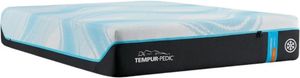
Two people, two schedules, and one very hot Central Valley summer is exactly the problem this one solves. It ships as two pieces in Split King, so each side can sit on its own adjustable base and one partner can raise the head for snoring or reflux without moving the other person an inch. LuxeBreeze is the strongest cooling tier in the lineup, which is the upgrade that matters when overnight lows stay warm. The firm feel keeps hips supported for back and stomach sleepers. Plan on Split King or Twin XL bedding, and ask about setup for both pieces.
Top Features
- Strongest cooling tier: LuxeBreeze layers deeper cooling material under a cool-to-the-touch cover for sleepers who run warm.
- Split King in two pieces: Each side works with its own adjustable base, so positions and motion stay completely independent.
- Firm feel at a 13-inch profile: Deep material with a supportive surface that holds hips in line for back and stomach sleepers.
- Bedding note worth planning for: Split King takes Twin XL sheets or a purpose-made split set rather than standard King bedding.
Tempur-Pedic TEMPUR-LuxeAdapt 13” TEMPUR Material Firm Smooth Top Queen Mattress
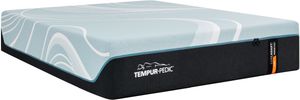
Choose this one when you want the deepest conforming in the line and cooling is not your first concern. It shares the 13-inch profile with the LuxeBreeze, but the material budget goes toward contouring depth instead of the top cooling tier, so heavier sleepers get more to compress through before reaching the support core. The firm feel fills the lumbar curve for back sleepers and anyone who wakes with lower back stiffness. It arrives as a single-piece Queen, so ordinary Queen sheets and your current frame work. Compare it against the LuxeBreeze in person at Urner’s.
Top Features
- Maximum contouring depth: The LuxeAdapt build puts its material toward conforming, which suits heavier sleepers and anyone chasing pressure relief.
- Firm feel: Holds the hips level and fills the lumbar gap, the combination back and stomach sleepers usually need.
- Single-piece Queen: Works with standard Queen sheets and an existing supported frame, with no split bedding to buy.
- Cooling contrast worth testing: Cooler than an older foam bed but a step below LuxeBreeze, so try both if summer heat is your main complaint.
Try Tempur-Pedic Mattresses in Person at Urner’s and Feel the Difference Tonight
TEMPUR material redistributes pressure instead of resisting it, which is why it takes load off the shoulder and hip that a spring bed concentrates. The lineup spans real firmness levels and three distinct cooling tiers, and the right match depends on your sleeping position, your body weight, and how much heat you carry into the night. Get those three inputs right and the rest of the decision falls into place quickly.
Come try Tempur-Pedic mattresses at Urner’s and find out in fifteen minutes what a spec sheet cannot tell you in an hour. Our team knows the whole lineup and the Central Valley climate you are sleeping in, you can compare a medium against a firm on the same visit, and every mattress includes professional delivery, setup, and old mattress removal. When you have a question two years from now, you are calling a local store in Bakersfield rather than a support line, which is the part online-only sellers never manage to replace.
Frequently Asked Questions about Tempur-Pedic Mattresses
Tempur-Pedic mattresses are worth the price for sleepers who need serious pressure relief, strong motion isolation, and a bed that holds its shape for years. The value comes from dense proprietary TEMPUR material and long service life, so the cost per year of sleep lands closer to a mid-priced bed than the sticker suggests.
A well-supported Tempur-Pedic mattress commonly performs well for around eight to ten years, and the line is typically backed by a ten-year limited warranty. Longevity depends heavily on using a solid, properly supported foundation, since inadequate support is the most common cause of premature sagging.
Side sleepers with hip and shoulder pain generally do best on a softer to medium feel with deeper comfort layers, such as a soft ProAdapt or LuxeAdapt configuration. Those models allow enough shoulder and hip sink to keep the spine neutral instead of forcing one joint to carry the load.
Current Tempur-Pedic mattresses manage heat far better than older memory foam, using the SmartClimate Dual Cover System, phase change material, and ventilated airflow. Sleepers who genuinely run hot should step up to a ProBreeze or LUXEbreeze model, which add deeper cooling layers rather than relying on the cover alone.
The difference is primarily material depth and firmness choice, moving from an 11-inch medium Adapt to a 12-inch ProAdapt with soft, medium, and firm options to a 13-inch LuxeAdapt in soft or firm. More depth means more contouring and more material for heavier sleepers to compress through before reaching the support core.
Most people need roughly two to four weeks to adjust to a Tempur-Pedic mattress as the material responds to body heat and the body adapts to a slower, conforming surface. Sleep trials generally require a minimum break-in period before a return for that reason, so give the bed a full month before judging it.
Why Trust Urner's and Urner's Mattress?
Urner’s started on the back of a bicycle - yup! A bicycle! David E. Urner, a local high school teacher, who spent his summer months selling Wear Ever cookware off the back of a bicycle (think 100+ degrees). David teamed up with another local teacher, Errol P. Janes to create “a new type of store – one that would cater exclusively to providing an easier way of living for the women of Kern County”, and on September 19, 1919, Home Appliance Store was opened to the public. The store boasted a rather impressive selection of “modern” appliances, including a washing machine, a freezer, a gas range, an automatic dishwasher, and an assortment of small appliances. Since then, Urner’s has expanded selections to appliances, furniture, mattresses and cabinetry!
For nearly one century, the Urner family and Urner’s business have both been an integral part of Bakersfield and Kern County, with contributions to community (Better Business Bureau, Sister City Projects, Bakersfield Symphony), charity (Ronald McDonald House, St. Jude’s Dream Home, House of Hope) and education (CSU Bakersfield, Ray Dezember Leadership Development Center. Explore the website, visit the store, or join us socially. We’re all about home, all about fun, and all about you… and we’re ready to make you a part of the Urner’s family today.
Shop Tempur-Pedic Dryers at Urner’s
Stop by any of the 6 Urner’s and Urner’s Mattress locations in Bakersfield, CA to see what a difference buying local with an experienced staff can make. Our friendly experts are always happy to help you explore the best dining room cabinets for your living room — whether you call us at 661-396-8400, use our online chat feature, or visit us in person.